Dragon Force: Rewind Review

It’s 1996 and you just plugged in your Sega Saturn.  What do you play?  Well another one of my favourites of course, Dragon Force.  An amazing tactical strategy game translated for the North American market by Working Designs, Dragon Force takes you to the world of Legendra.  Here you take control over one of 8 possible rulers to control the land and face off against a powerful evil.

After choosing your ruler, you set out onto a top down map of Legendra.  The map is represented by various small villages, forts and castles that you can proceed to on pre-designated paths.  Each ruler starts off with a small assortment of Generals, each with their own basic type of army at their command.  The main strategic map works in “real time” though travel times are very slow, and opening a menu pauses any actions.  Each turn, or week, allows you to place commands for your generals, recruit troops, or engage in combat.  The ultimate goal here is basically to take over all the other castles in order to face off against the final boss, Madruk.

dragon force
Everybody’s favourite character

Every general has their own stats and abilities as well as troops.  They also increase in level as they take part in battles.  Every level of course updates the standard stats like health, magic and strength.  It also allows them to command more troops into battle up to a maximum of 100.  They can also use several items, or equipment for advantages in battles.  Each general is unique, and you can recruit more during the game.  You can even recruit foreign generals while on the field, even with the castles they may be holding.

Battles take place whenever a general comes in to contact with another general, or a castle.  At the start of each battle, there is a quick discourse between each general, and then you are given the option to attack, retreat, or try and recruit the enemy general.  The actual combat is mostly rock, paper, scissors.  There are a variety of clases available, from archers, to monks, to soldiers, to mythical creatures like harpies and dragons.   You then enter a 2.5D plane where combat commences.  You can choose various tactics for your troops to follow, either offensive, defensive, or some special attacks, all of these along with different formations that add defensive or offensive power to your troops.  From here, the rock, paper, scissor mechanics take over as each troop type favours another, and though you may use some magic to sway the tide, battles are generally pre-determined by either troop type or simply numbers.

Dragon force
Ninjas vs Samurai! Who will win?

Each battle ends when one general or the other’s health is depleted, or they retreat, or all armies are defeated, in which place a general on general duel takes place.  This continues until one side has lost all of their generals.  At this point the castle is won or lost, and the defeated generals who didn’t retreat are captured and sent to the nearest castle as prisoners.  They can later be freed, ransomed or recruited to your army.

dragon force
I have the best negotiation skills

Though you have limited control over the battle, there is still a great deal of tactics at hand here as you need to mix the right generals together, defend multiple areas, all while managing your troop levels.  This mix of choices both on the tactical map and in each battle adds a lot of deep layers to what might otherwise seem a fairly simple game.  However, the game pace does suffer due to this layering as you can feel like you are in the game for a long time without much progression.  The way your generals slowly walk across the map while the time slowly flickers down just makes it more apparent.

Story wise don’t expect to be blown out the water. The general dialogue is quaint and to the point but doesn’t exactly exude gravitas. Where the story does stand out is the 9 unique stories that play out depending on which ruler you choose. At the end of the game you are treated to a short scene, at which point you can choose to play as enemy faction and take control of Marduk’s generals.

There is a huge amount of gameplay and replayability here that current similar games lack.  Though the pace of the game really doesn’t suit modern gamers as much as it means long hours of play before you might see much result in the game.  For completionists however there is so much to come back for.  The surprising depth of the game is also not limited on anyway by the seemingly simple combat, and often predictable A.I..  If you still own a Sega Saturn and haven’t tried Dragon Force you are definitely missing out on a gem from that console’s short lived span.

Don’t forget to comment and like below, and share the review if you like it!

If you missed last week’s Rewind Review click the link!

For more retro gaming be sure to visit Retro Gaming! for a lot of great articles videos and random stuff.


The AbleGamers Foundation

Like many of you I am an avid gamer. Gaming these days has gone far beyond just wasting time getting to the next level, or beating the next boss. In today’s era of gaming, the community and engagement has grown beyond anything previous. Games are no longer just past times, but the way in whch many people get to interact with others. Across all ways of life, all borders, these games help us connect to one another and share an experience.

Unfortunately, with varying restrictions both physical and mental, many people of all ages are not able to take part in these massive communities of gamers, and enthusiasts alike.

That’s where AbleGamers Foudation comes into play. With thier aim to improve the quality of life for people with disabilities through the power of gaming, AbleGamers empowers those people to join these communities and engage with people in ways they previously couldn’t.

Through assisting game and hardware developers in creating more accessible games and tools, AbleGamers helps people break down barriers, and enjoy the stories, the action, and the adventure of modern games.

Though my reach is short, I am hoping that by engaging the community I do have behind me, that we can help AbleGamers expand their reach to even more titles and platforms, and remove as many of these barriers as possible.

There are various ways you can help, obviously you can make a donation at the button below or simply share the post and we’ll see how many people we can motivate to help!

If you do get around to donating I will be doing some giveaways for a few games and you will have  a chance to win!

Once again, thanks so much for everyone’s support and don’t forget to like and comment below and follow @AbleGamers on Twitter
Online fundraising for MicBeMac Games Ablegamers Charity Fund

Youtube: Scheduling and the art of balance

Becoming successful running a Youtube channel often comes down to one important word, schedule.  Keeping regular, and consistent with your content is necessary and incredibly challenging.   Most people starting off a gaming channel are part timers.  To make it work you must be a master of time management.

There are all sorts of important factors surrounding a successful channel.  Content, marketing, finding a niche and a fan base.  Time management however can often trump all of this.  Most people starting off a channel may have enthusiasm but no real experience.   Bringing out consistent high quality product requires you not only take the time to plan your channel, but also in creating it.

Take the seemingly simple task of prepping a video file for upload.  Compressing, decompressing, uploading, processing.  All of these steps take time.  Heaven forbid the Youtube servers slow down or cough out your content and laugh at you.  Have fun watching the upload and processing bars load up all over again.  And we haven’t even begun to talk about editing.  If you want to put out high quality content, you need to painstakingly edit each second of your video before upload.  even short 10 minute videos can take hours to properly edit and format, fix sound glitches and add graphics or annotations no less.

Youtube schedule
Please don’t crash, please don’t crash…

Take @weirdwizarddave for instance.  He painstakingly edits each of his videos to a very high standard before release.  Quick cuts, narration, setting up scenes for his often story driven playthroughs.  Adding music and graphics cause more delay.  How does he handle this time concern?  Through strict scheduling.

Weird Wizard has adopted a TV like schedule for his various videos.  Sticking to a pre-determined format helps him keep on time.  This also gives his channel a unique feel as you can choose when to ‘tune in’ to see your favourite show.  Hey, it worked for cable right?  The downfall of course is what happens when life strikes and he misses an episode of Retro Friday?  Well not unlike our favourite tv shows, that go on hiatus, he risks losing viewers.  It is critical that once your schedule is set you maintain it.  Don’t over stretch and find yourself consistently missing your regular release times.

Depending on a the type of channel you run, scheduling also creates and controls another conflict.  This is the conflict between the type of viewers you have.  Are your viewers the type who want to binge watch entire series, or like regular but differing content.  Another fairly popular youtuber, namely @markiplier is an example of the latter.  Though he offers a fairly regular schedule, there is not much consistency in the type of content he puts out.  You may find a few episodes of a playthrough in a row, or a mix of these and some short one shot games as well.  Though this style offers a lot of differing content those viewers hoping to see someone they enjoy play through their favourite game, or a game they just want to check out often have to wait some time to see the series to completion.

Another great example of a very popular channel with a unique schedule is @jackscepticeye.  Jack has a very consistent schedule but chooses to release episodes at a very controlled pace.  This gives his channel a ton of variety with dozens of different games being featured every week.

All of these scheduling techniques have their own way of drawing regular traffic to your channel.  Either through a strict schedule, and knowing when your favourite episode will be on, or by drawing you to check back often in hopes your favourite Youtuber uploaded episode 2 in their most recent playthrough.


One of my favourite series from Jacksepticeye, just wish it was more regular!

Now, we’ve gotten our schedule sorted out, we’ve edited our videos, we may have even remembered to go interact with our audience some, but we forgot one important time sync.  When are we going to actually play the games we’re recording?  This is where the scheduling piece can really kill your ability to be consistent.  Some of the Youtube channels mentioned earlier are full time, others are part time endeavors.  Choosing the right schedule to fit your availability really comes into play with the part timers.

This last one affects even the likes of me!  Putting the time aside to commit several hours to a game to finish it as a playthrough, or gather enough information to formulate an opinion for a review is a task in itself.   The approach here simply differs depending on your time commitments.  Fulltimers gain the advantage of being able to spend a day or two, or however long to complete a game.  The important factor for them is making sure they are playing game far ahead enough in advance to have ready content for their channel.  You need to be 2 or 3 games ahead of the content your are editing and uploading.

Us part timers have it different.  We may not be able to set an 8 hour block of time aside to commit to one game or another.  Between jobs, family and whatever else that may come up, it might be hard to free up even and hour some days.  Scheduling and time management here becomes the ultimate key to your success.  How well can you manage your time in order to have a steady flow of product.  No different than a manufacturer, you need to know what you have to do far in advance.  You also have to balance game time, and episode length to best stretch each play through, without robbing viewers of content.  You must avoid a myriad of short 4 minute videos that may extend your content a few more days, and find the balance between that and long video lengths that may bore some viewers.

So what can we say about scheduling? Consistency is key. Over extending against your time limits will only lead to disapointed viewers. Be sure to plan and think carefully about who your audience is, and what their expectations are. One major factor to consider beyond just your analytics is feedback from the viewers. Decide on a schedule, but don’t be afraid to go with the flow so long as it keeps your audience and community happy. Hopefully you managed your time well enough to get through this post!

Thanks and don’t forget to comment below. Are you working on a channel? How do you deal with scheduling?

Don’t forget to check out the rest of these guys fun content and give them a sub ;
Weird Wizard Dave
Markiplier
Jacksepticeye

If you enjoy my rants…. check these ones out
How Steam Has Changed PC Gaming
Free to Play, or Fee to Pay?

Weird Wizard Dave, My First Encounter

Check out the first video that I discovered of Weird Wizard Dave.  The one that instantly had me subscribed to see more of his in-character playthroughs, and unique humour.  Enjoy this episode of Medieval Engineers

Weird Wizard Dave’s play through of Medieval Engineers had me hooked.  His wit and unusual in-character narration were both clever and endearing.  You could also see the amount of time put into the game and editing, to present a very finished product to his viewers.

All of these are great steps to take in your own channels if you are starting off.  Create a character and develop it’s charm.  Balance this with your skill in both gaming, and editing to provide a solid product.  Youtube videos are a dime a dozen, so the impact of this time spent is immediately apparent, and will set your channel apart from others.

It could still be bigger, I guess?

These steps will also give your channel more focus.  Careful choice of the games you play to suit your character is the next step.  Don’t stray too far out of your niche, and alienate your viewers.  Build up your core viewers with consistent quality, and they will share your content on a regular basis.  This will allow more freedom in your channel later on as your audience builds.

And now it's time to smash stuff
And now it’s time to smash stuff

For the full playlist:

And don’t forget to subscribe to his channel, and follow him on Twitter @weirdwizarddave

Medieval engineers preview on www.micbemac.com 


Free to play, or fee to pay?

With seemingly everything going free to play these days, and the regular threat of pay to win arising each time where should we gamers stand? It’s true that most of these free to play options come on mobile devices, where the majority of people are looking for quick fixes, and generally a lack of attention span is required as built in wait times in most of these games require us to close app, an open the next app, or finish that email we were supposed to be writing at work.

Free to play games have existed for awhile in the PC market, generally associated with MMORPG’s like Star Trek Online, or Final Fantasy XIV, among others, and often cases also associated with games that failed as pay to play games. There are also other popular titles the likes of DOTA, and DOTA 2, or Mechwarrior Online: Mercenaries that were designed from the start with free to play in mind. All of these run under the principle of microtransactions that add to enough money for the developers to not only keep servers up and staff paid, but the expectation that new content will be released on a regular basis.

In theory it sounds great, we the players don’t have to pay for a game, and we still get at least some basic access to it’s functions, but without the bells and whistles, extra game functions, more experience points, new equipment or tools to speed up our characters’ development. But not unlike the surge of early access games, and playable alphas currently available, free to play models are often associated with games that are not complete, and may never be complete for those of us who decide not to buy in game currency, or penny up for that new suit of armour, or what have you. When does this balance begin to ruin the play experience?

Going back to a game that I had highly anticipated having played many of the previous versions, and having had one of my first forays onto online gaming with in the early 90’s, Mechwarrior Online: Mercenaries had me hooked early on as a potential game to relive one of the better communities I had been a part of before. Although a well made game, what it became instead, was a consistent tease of what I had hoped for. A game that would grow and build a strong community that I could be a part of. Instead, it became more of a card collection game, as rather than features being added on a regular basis, it seemed only a stream of new mechs and new items to stick on my in-game dashboard were coming my way. And although these additions didn’t affect the balance or playability of the game for me, the constantly extended wait for the community made it hard for me to continue to support the game, and the friends I had reunited with, slowly slipped away into a constant offline state.

The question then stands, would I have rather paid for a game that contained all the features I wanted, or played a game for free, and potentially spent just as much money on over the long term, in hopes they would eventually add the features I hoped for?

Certainly if given the option, I would probably choose to pay a fair price over being nickled and dimed for countless months. Free to play often is a great way to take a look see at interesting game without making a financial investment in it, but once you’ve decided you like the game, and want to continue to grow your character, is it really fair to have to make regular payments to do so? I can’t say yes.

What’s your opinion? Let me know in the comments below, or like or retweet if you agree.

Streaming? Into the future…?

With Nvidia recently announcing its foray into the console business in this article on IGN.com, with it’s release of the Shield console, featuring their game streaming service The Grid, I began to think about the past of physical media and the potential future of how we may be gaming in the near future.

Before the advent of affordable compact disk drives, we gamers were all quite used to a massive case of floppy drives, be they 5 1/4 or 3 1/2, we knew we’d be spending potentially hours with installing larger games onto our PC’s with multiple disk changes along the way, and heaven forbid any of them ever got scratched! Our hearts would sink, and we’d scramble to see if a friend had a copy of the install disks so we could start over. Console gamers faired a little easier, with their mostly less bulky cartridges in over sized plastic cases. We would figure out ways to stuff a dozen of them inside a knapsack with our consoles to bring to our friends. In general we avoided magnets and spills, and hoped the batteries in the cartridges didn’t die and delete all of our saves.

Obviously gaming media has evolved over the years, from those very disks, and cartridges, to compact disks with their own accomplishments of getting to that next disk in big games like Final Fantasy VII for example, and dvd’s and then Blu-Rays. Able to store more and more information with each evolution and become more durable as well. One of the last steps being the direct download. Imagine, no media at all. You don’t even have to step from your home to the store, or mailbox to get your game, just click the link and wait till it’s nested itself on your hard drive, ready to install. The real reflection however is how the technology has mirrored the general need in current society for more and more immediate gratification. Enter streaming.

Now there is no longer a need for media, even your hard drive needs minimal space, click the link, start playing, and hope there is no lag. So how does this effect the industry as a whole? We already know that more and more publishers have gone away from offering hard copies of their games, and rely on direct downloads or Steam to get their products out, though it’s not measured if this is cheaper for the publisher, and results in better overall pricing for the consumer. This is especially apparent with big AAA games that cost the same whether a physical copy or a digital copy is purchased. As a consumer we’d think that downloading and not forcing the publisher to make all those expensive disks should result in cost savings for us, but it doesn’t usually work that way.

Where streaming will differ greatly in this equation is the need for the providers to run full servers that can handle the load of their customers’ demands without hiccups in service, or the aforementioned lag. This leaves us with immediate gratification of multiple titles available immediately with no wait, but the added costs of funding the providers to make sure we don’t experience slow downs or poor quality. We’re sure to see our average costs for this “convenience” far exceed our need for immediate gratification.

The nostalgic part of me fears the potential shift to more and more online only content, and the lack of a true feel for the collector’s heart that many gamers share. A shelf full of titles to show off to friends was always a part of the pride we felt when building our collection of games. That pride will now be shared with anyone who subscribes to the service, and diminished greatly as a result. As our need for more and more immediate access grows, are we leaving some of the fun behind?

Or maybe I’m just getting old…

How Technology has hindered the growth of quality gaming

Every few months there is some new technology, new device, or new console released that on the surface should help improve gaming experiences and creativity, but often fails to do so. The recent announcement of the HTC Vive to the 3D headset market, as limited as that market is, is one of the latest entries.  Where does the line get drawn where these new techs and development tools start hindering game developers from making quality games for us all to enjoy?

The examples are obvious when you look at the console world. Every few years, generally during the peek of the current consoles’ lifespan a new tech, or gimmick comes across that is supposed to help enhance and extend our experience beyond what the current generation consoles can do. Some of these advances have been great, Sega adding Compact Disc readers to their Genesis and creating the Sega CD, giving an opportunity for games to evolve with high quality sound and cut scenes, but does anyone remember “Project Mars”? Project Mars gave us a rushed, under supported 32x porting device for Sega systems, just months before the Sega Saturn was released and gave us access to 8 more colours to games we mostly played to death already, it also hindered the sales and promotion of games for the saturn as developers were split between 4 medias for Sega, just as consumers were split between the cheaper, poorer 32x, or the expensive, but not well supported Saturn, and with the Sony scooping up 3rd party developers for their Playstation just around the corner, it was a doomed beginning.

More modern examples of the Wii-U updating the well thought out, extremely well marketed Wii console from Nintendo but not really adding anything new for us to do. Even the development and release of the PS4 at the time of the PS3’s peek years not only shortened the PS3’s life span, but also hasn’t given us the type of quality games yet that were promised from it’s huge price point. Though we have seen better than ever graphics, the ability to easily share media, and enhanced motion controls, I have yet to have a new experience on either console that wasn’t pulled off better at lower graphic fidelity on previous consoles.

This jump and grasp for better graphics, and new innovations has also struck the software side of things. The prime example being the beloved Final Fantasy series which began as a well constructed, ugly looking game, and has developed into a beautifully disappointing series of games which have tried so hard with each iteration to provide us with new gameplay, and new emotional storylines but has missed the mark due to their need to improve upon a product that was never broken.

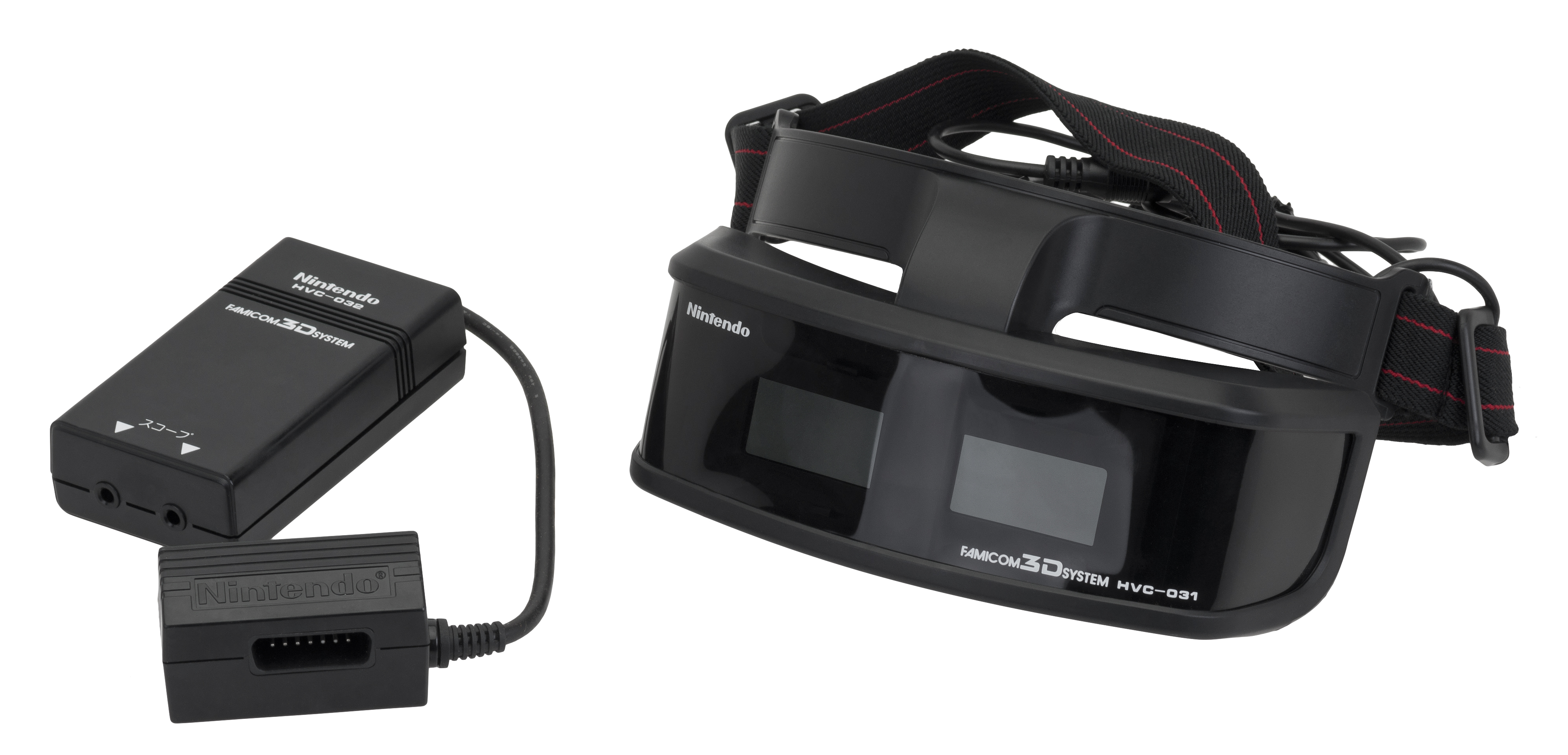
3D gaming has been the mainstay of failed attempts at creating unique environments and gameplay options, if only for the amount of times it has been attempted and has yet to really take off in a genre which is hard to argue isn’t perfect for 3D to exist.  Developers have been attempting to make 3D and virtually reality the norm since the early 80’s, and though movie goer’s have seen potential in various fictional possibilities, and the beautifully rendered Avatar, outside of the Nintendo 3DS, we have yet to see a consistent vision for the use of 3D tech in games.

 Remember this?

There was SegaScope, the Famicom 3D system, the PS3 tv, the list goes on.  All failed attempts at adding gimmicks to our game play experience with only intrigue at the content or playability that energy could have been sent to instead. Even the popular Oculus rift has lacked solid games and development to take advantage of it’s tech. In the end, I’d rather play a well built, playable game, with good character progression, great gameplay and a rewarding story over constant upgrades to my hardware for the next batch of technology that comes out and fades away.

Relics of bygone eras

I was cleaning out my garage and found these artifacts….

20150227_194154

These brave warriors from my past.  We’ve lost a few good men along the way.  The Sega Master system and 102 games my father sold for $45 at a garage sale, the Sega Genesis, which is still buried somewhere in garage, lost forever, and my PS2 which tragically took its own life, and launched itself from a box during a move into a new apartment some years back.

Honourable mentions to those brave soldiers still fighting the good fight, The PS3 which has retired to a leisurely life of Netflix and Just Dance with the wife, and the PS4 doing the grunt of the work down in the trenches every day, it’s only complaint that is has to share the table with that damned PC which gets to look out the window from where it finds it’s home.

Who else suffers from nostalgia?

How Steam has changed PC gaming

If you own a steam account, when was the last time you looked down your library list, and I mean, really looked?  I did just that recently, scrolling through my list of games, noticing all the grayed out options.  Options of games I had never even gotten around to installing, yet I paid money for them all.  The list goes on with dozens of titles, some played frequently, some only once.  Really, what was I thinking when I bought some of these titles?

Sure enough, the frequent sales, and promotions on Steam have led me to a level of overexposure to gaming availability that I would be hard pressed to find in any local computer store today.  As an old school gamer, I remark on the times years ago I’d spend hours going through the rack of free ware games on that spinning rack near the cash at the local supermarket, looking for something to spend my $4.50 on, and I always managed to find something, no matter how gruelling it was to play through once it was home.

Steam has flooded the market with cheap, accessible games and depending on your opinion has rejuvenated the PC gaming industry with it’s choice, but also hurt some developers as we all wait for their games to go on special before we purchase rather than buy at first price.

The biggest advent we’ve seen in recent times is the ever increasing use of Steam’s Early Access program to give us access to even more, less finished games.  It seems like a broken system to give bigger developers more reasons to put out broken, unfinished product, when more times than not with modern release schedules we are going to get that anyway on the final release date.  It’s easily arguable however that the breadth of great, up and coming indie developers would not nearly be so big without access to this type of crowd funding to get their games out there and finished.

So where do we stand?  Has Steam rejuvenated what was once thought to be a dying breed of PC games, or has it over saturated the market with cheap, unplayable garbage?  All I can say looking through my catalogue, and those of my friends, is this sheer amount of selection now available to us, from classics we wouldn’t otherwise be able to run on our modern machines, to independently developed wonders that we dive into for hours, to massive budget AAA monsters, to the glitchy, unplayable crap that give us all a good laugh watching our favourite youtubers play through can’t be a bad thing, no matter how much of my wallet has gone to games I haven’t even had a chance to download yet.


What are your thoughts?