
How Technology has hindered the growth of quality gaming

Every few months there is some new technology, new device, or new console released that on the surface should help improve gaming experiences and creativity, but often fails to do so. The recent announcement of the HTC Vive to the 3D headset market, as limited as that market is, is one of the latest entries.  Where does the line get drawn where these new techs and development tools start hindering game developers from making quality games for us all to enjoy?

The examples are obvious when you look at the console world. Every few years, generally during the peek of the current consoles’ lifespan a new tech, or gimmick comes across that is supposed to help enhance and extend our experience beyond what the current generation consoles can do. Some of these advances have been great, Sega adding Compact Disc readers to their Genesis and creating the Sega CD, giving an opportunity for games to evolve with high quality sound and cut scenes, but does anyone remember “Project Mars”? Project Mars gave us a rushed, under supported 32x porting device for Sega systems, just months before the Sega Saturn was released and gave us access to 8 more colours to games we mostly played to death already, it also hindered the sales and promotion of games for the saturn as developers were split between 4 medias for Sega, just as consumers were split between the cheaper, poorer 32x, or the expensive, but not well supported Saturn, and with the Sony scooping up 3rd party developers for their Playstation just around the corner, it was a doomed beginning.

More modern examples of the Wii-U updating the well thought out, extremely well marketed Wii console from Nintendo but not really adding anything new for us to do. Even the development and release of the PS4 at the time of the PS3’s peek years not only shortened the PS3’s life span, but also hasn’t given us the type of quality games yet that were promised from it’s huge price point. Though we have seen better than ever graphics, the ability to easily share media, and enhanced motion controls, I have yet to have a new experience on either console that wasn’t pulled off better at lower graphic fidelity on previous consoles.

This jump and grasp for better graphics, and new innovations has also struck the software side of things. The prime example being the beloved Final Fantasy series which began as a well constructed, ugly looking game, and has developed into a beautifully disappointing series of games which have tried so hard with each iteration to provide us with new gameplay, and new emotional storylines but has missed the mark due to their need to improve upon a product that was never broken.

3D gaming has been the mainstay of failed attempts at creating unique environments and gameplay options, if only for the amount of times it has been attempted and has yet to really take off in a genre which is hard to argue isn’t perfect for 3D to exist.  Developers have been attempting to make 3D and virtually reality the norm since the early 80’s, and though movie goer’s have seen potential in various fictional possibilities, and the beautifully rendered Avatar, outside of the Nintendo 3DS, we have yet to see a consistent vision for the use of 3D tech in games.
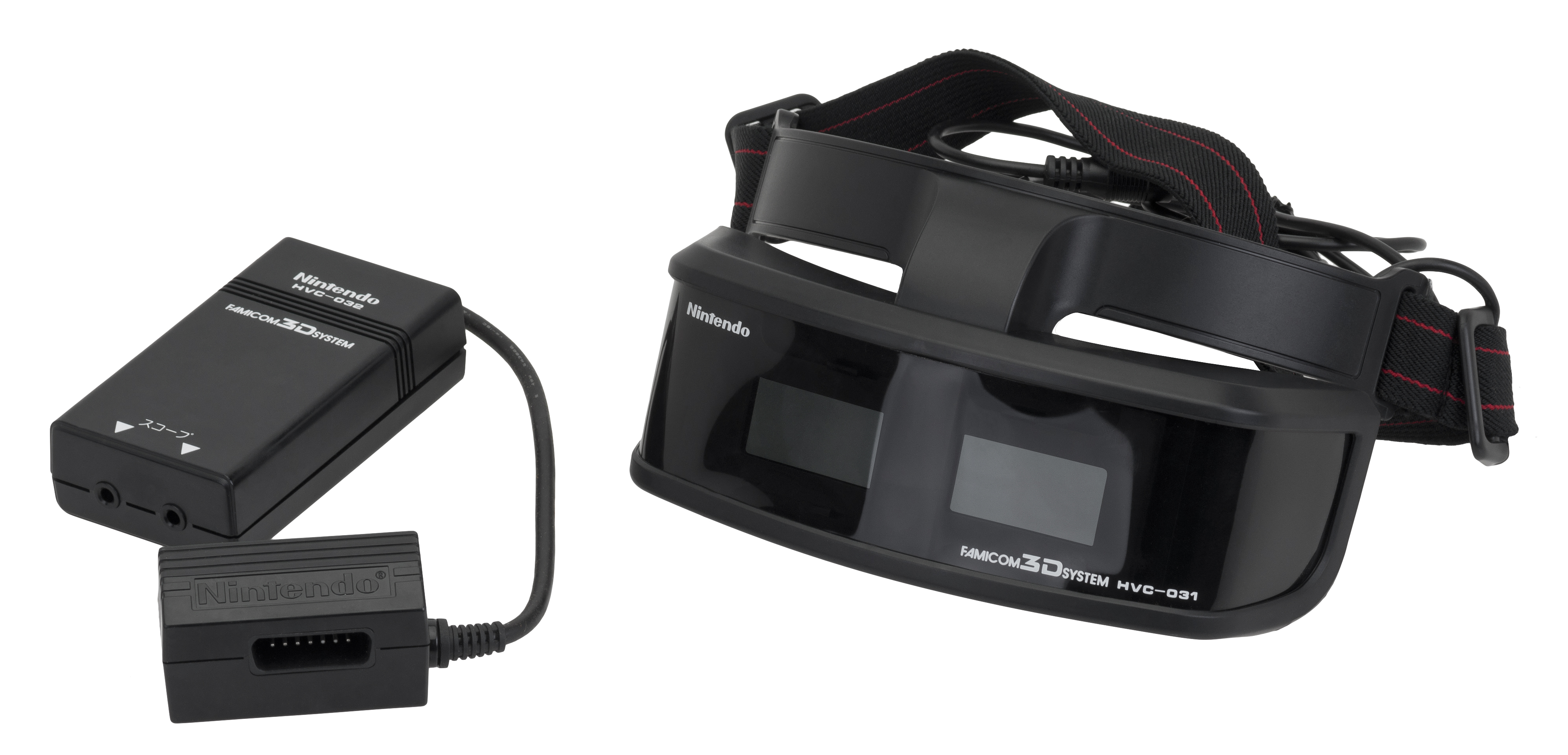
 Remember this?

There was SegaScope, the Famicom 3D system, the PS3 tv, the list goes on.  All failed attempts at adding gimmicks to our game play experience with only intrigue at the content or playability that energy could have been sent to instead. Even the popular Oculus rift has lacked solid games and development to take advantage of it’s tech. In the end, I’d rather play a well built, playable game, with good character progression, great gameplay and a rewarding story over constant upgrades to my hardware for the next batch of technology that comes out and fades away.

The Voiceover

So, Leonard Nimoy passed away the other day.  And while most people will recognise and remember him for his most famous role as Spock on Star Trek, some of my more fond memories of the man happen to be tied to games.

Though with the influx of movie and tv tie ins these days, where actors often reprise their roles, in the mid to late 90’s it wasn’t nearly as common for a well known actor not known as simply a voice over actor would lend his voice to a video game.

We could also find it strange that one of the earliest games Nimoy would lend his voice to would not be a Star Trek game, but however a  whimsical, and downright weird game such as Seaman.

Cover Art for Seaman

An interesting, if not perplexing early attempt at an interactive pet sim, one of the only games released on the Sega Dreamcast to use the microphone attachment, Seaman used Nimoy’s baritone voice as the instructional narrator for the game. As the game loads up, Nimoy’s voice tells us about the odd, “legendary” Seaman creature, which are then tasked with helping grow and develop by voice commands and tapping on the “glass” of it’s aquarium. It’s hard to argue that Nimoy’s voice over wasn’t one of the best parts of that game.

Seaman, Opening Narration

And who can forget hours upon hours, of “one more turn” as we listened to Leonard Nimoy’s voice describe major events, and new technologies as we dove head first into Civilization IV and all of it’s life sucking replayability.

Personally I spent a great deal more time with Leonard Nimoy gaming away till way too late into the night then I can say I did watching replays of Star Trek. Though we will miss him for his many screen roles, and his poetry and music, we will also miss him for his influence over modern gaming, and the uprise of quality voice overs in the many games we play today.

“In the beginning, the Earth was without life, and void….”

Relics of bygone eras

I was cleaning out my garage and found these artifacts….

20150227_194154

These brave warriors from my past.  We’ve lost a few good men along the way.  The Sega Master system and 102 games my father sold for $45 at a garage sale, the Sega Genesis, which is still buried somewhere in garage, lost forever, and my PS2 which tragically took its own life, and launched itself from a box during a move into a new apartment some years back.

Honourable mentions to those brave soldiers still fighting the good fight, The PS3 which has retired to a leisurely life of Netflix and Just Dance with the wife, and the PS4 doing the grunt of the work down in the trenches every day, it’s only complaint that is has to share the table with that damned PC which gets to look out the window from where it finds it’s home.

Who else suffers from nostalgia?

How Steam has changed PC gaming

If you own a steam account, when was the last time you looked down your library list, and I mean, really looked?  I did just that recently, scrolling through my list of games, noticing all the grayed out options.  Options of games I had never even gotten around to installing, yet I paid money for them all.  The list goes on with dozens of titles, some played frequently, some only once.  Really, what was I thinking when I bought some of these titles?

Sure enough, the frequent sales, and promotions on Steam have led me to a level of overexposure to gaming availability that I would be hard pressed to find in any local computer store today.  As an old school gamer, I remark on the times years ago I’d spend hours going through the rack of free ware games on that spinning rack near the cash at the local supermarket, looking for something to spend my $4.50 on, and I always managed to find something, no matter how gruelling it was to play through once it was home.

Steam has flooded the market with cheap, accessible games and depending on your opinion has rejuvenated the PC gaming industry with it’s choice, but also hurt some developers as we all wait for their games to go on special before we purchase rather than buy at first price.

The biggest advent we’ve seen in recent times is the ever increasing use of Steam’s Early Access program to give us access to even more, less finished games.  It seems like a broken system to give bigger developers more reasons to put out broken, unfinished product, when more times than not with modern release schedules we are going to get that anyway on the final release date.  It’s easily arguable however that the breadth of great, up and coming indie developers would not nearly be so big without access to this type of crowd funding to get their games out there and finished.

So where do we stand?  Has Steam rejuvenated what was once thought to be a dying breed of PC games, or has it over saturated the market with cheap, unplayable garbage?  All I can say looking through my catalogue, and those of my friends, is this sheer amount of selection now available to us, from classics we wouldn’t otherwise be able to run on our modern machines, to independently developed wonders that we dive into for hours, to massive budget AAA monsters, to the glitchy, unplayable crap that give us all a good laugh watching our favourite youtubers play through can’t be a bad thing, no matter how much of my wallet has gone to games I haven’t even had a chance to download yet.


What are your thoughts?

Thoughts on the evolution of gaming communities.

I had a brief conversation the other day with fellow blogger @TheNeoNerdBlog whom I recently began following, that got me thinking about how much gaming communities have changed, though also in many ways stayed the same over the years. I myself have been gaming now for over a quarter of a century, a crazy number in itself, and the many changes I have seen have been incredible.

When I first started gaming, at the beginning of the age of the console, most gaming communities consisted of you, your couch, and whatever assortment of local friends were over that afternoon. Games we played were often single player, but we all sat and watched intrigued while our friend finally beat that boss we always had trouble with, which seems to go along with some modern equivalent I am sure we are all aware of.

Everyone had a knapsack on the floor in the basement, next to the tv, primed and prepped to disconnect our system and get it ready to ship with a select few favourite games to our buddies’ houses down the street. They never left our sides. That chance for both brothers to beat up whoever might come out of that 2D door next, or partnering up two plumbers to fight off mushrooms in a vast play world were first and foremost.

Things change quickly though, and it was also around this time that our father’s got used to picking up the phone only to hear a squealing series of beeps, and we heard our mother’s call downstairs to get off the phone line, and our first 33.3k’s pushed bits of information across the World Wide Web, or 1200 baud in my case. My first experience online, fighting amongst friends in giant battle robots in MPBT 3025:Solaris. People who’s faces or voices I would never see or hear, people who today I may know only by their call signs though we may have been friends for years. Suddenly our communities reached well past our homes, and our schools, and sometimes even our countries. We started looking up time zones so we could figure out the best time to be online to meet with our friends. We became technical geniuses trying to figure out how to get back online after dropping mid way through a match. Hoping desperately that we could get back into whatever gaming lobby we were in before we let down our team mates.

These communities quickly grew and expanded, finding homes online in massive game lobbies like the Gaming Zone, where we might wait for hours for that familiar ting from your Zone messenger as a friend invited you to join a match. For me this was the golden age of my gaming career. Friendships were made that have lasted longer than some of the ones I have made in the normal run of my life. Hours spent before dawn, trying to get one last match before bed. Bringing friends along on the ride was the most important part.

Now as I’ve grown older, had a family, a career, and seen my time for gaming slowly dwindle away each year, and as I log into my youtube account to watch people play through games I no longer have time, or budget to pursue I am reminiscent of those first early years of gaming, sitting on the couch watching a friend play through a game.

Now in truth, my couch might be a slightly squeaky office chair, and that office chair might be shared with millions of other viewers from around the world, but the essence of those first communities, of sharing the experience of a great game, parallels in such an intriguing way with those first early days on the couch in the basement gaming away with your friends. Watching your friend beat a challenging level, jumping in to help out when they are lost, challenging each other to break the other’s record. Though the scale is nowhere in the same scope, the emphasis on sharing the experience will never leave gaming communities.